
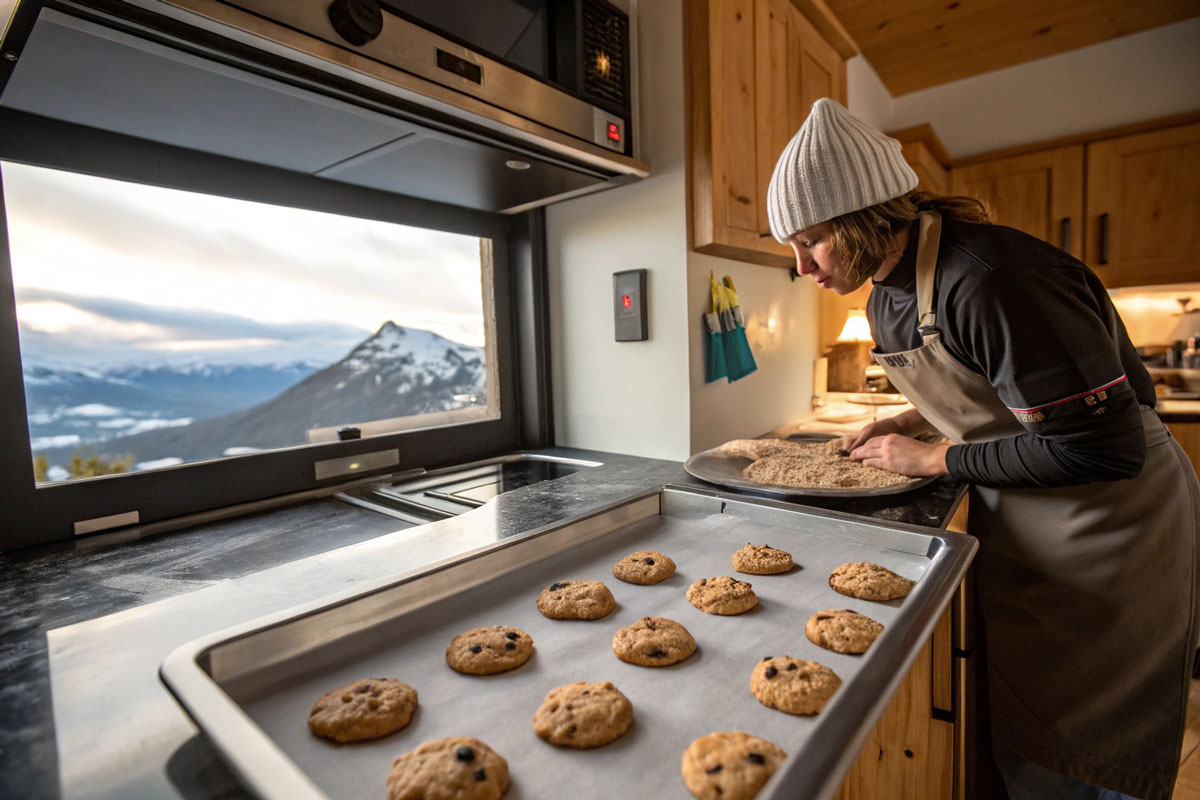
Baking at high altitudes—typically defined as elevations above 3,000 feet (914 meters)—presents a unique set of challenges that can frustrate even experienced bakers. If your cakes collapse, cookies spread too thin, or breads dry out too fast, you’re not alone. But fear not—once you understand how altitude affects ingredients and baking processes, you can easily adapt and create delicious, reliable results.
Why Does Altitude Affect Baking?
At higher elevations, the air pressure is lower. This means:
- Water boils at a lower temperature (e.g., 198°F at 7,500 ft instead of 212°F).
- Liquids evaporate faster, which can dry out baked goods.
- Gases expand more rapidly, causing batters and doughs to rise too quickly and then collapse.
- Less oxygen affects how ingredients react, especially in yeast-based and egg-leavened recipes.
These factors can throw off the balance of time, temperature, and chemistry in your favorite recipes.
Key Adjustments for High-Altitude Baking
1. Reduce Leavening Agents
Baking soda and baking powder can overreact in thinner air, causing baked goods to rise rapidly and then fall. Reduce:
- Baking powder/soda by 1/8 to 1/2 teaspoon per teaspoon in the original recipe (test with small reductions).
2. Add More Liquid
Increased evaporation dries things out quickly. Compensate by:
- Adding 1–2 tablespoons extra liquid (water, milk, or egg) per cup of flour.
3. Increase Oven Temperature Slightly
To help set the structure before it over expands:
- Increase baking temperature by 15–25°F.
- Shorten baking time by a few minutes and monitor closely.
4. Decrease Sugar Slightly
Sugar becomes more concentrated due to fast evaporation and can destabilize structure.
- Reduce sugar by 1–3 tablespoons per cup.
5. Use Extra Flour If Needed
To strengthen structure:
- Add 1–2 extra tablespoons of flour per cup if cakes or muffins are collapsing.
Specific Tips for Different Baked Goods
Cakes
- Reduce leavening and sugar slightly.
- Increase liquid and oven temperature.
- Use slightly less fat to improve structure.
Cookies
- Cut sugar by a bit and add a tablespoon of water or egg.
- Chill dough to prevent excessive spreading.
Breads
- Yeast rises faster at altitude.
- Let dough rise for a shorter time and punch down twice before shaping.
- Avoid over-proofing.
Muffins and Quick Breads
- Follow cake rules.
- Bake immediately after mixing to preserve gas bubbles.
Altitude Adjustment Example
Standard Cake Recipe Adjustment at 5,000 ft:
- Baking powder: Reduce from 2 tsp to 1.5 tsp
- Sugar: Reduce by 2 tbsp
- Liquid: Add 2 tbsp milk
- Oven Temp: Increase from 350°F to 365°F
- Flour: Add 1–2 tbsp if batter seems thin
Experiment and Take Notes
Not every recipe reacts the same at altitude. Keep a baking journal and note what changes work for you. Start with small batches and only change one variable at a time.
Bonus Tip: Use High-Altitude Cookbooks or Adjusted Recipes
If you live above 3,000 feet, it’s worth seeking out cookbooks or blogs from high-altitude bakers—especially those in cities like Denver, Santa Fe, or Salt Lake City. They’ve already done much of the experimenting for you.
Conclusion: You Can Bake Beautifully at Altitude
Baking at high altitudes doesn’t mean giving up on delicate cakes, chewy cookies, or soft breads. With a few smart adjustments and a little practice, your kitchen at 5,000 or even 10,000 feet can turn out baked goods just as perfect as sea level. Let science be your guide—and your oven be your ally.